Sunday, February 20, 2005

The Glocal Book:"The Book of Tea" by Okakura Kakuzou(Tenshin)-No.67

Rikiu; the Ideas of Cleanliness;
Not Cleanliness Alone,
but the Beautiful & the Natural Also


「In this connection there is story of Rikiu which well illustrates the idears of cleanliness entertained by the tea-masters.

Rikiu was watching his son Shoan as he swept and watered the garden path.

"Not clean enough," said Rikiu, when Shoan had finished his task, and bade him try again.

After a weary hour the son turned to Rikiu: "Father, there is nothing more to be done.

The steps have been washed for the third time, the stone lanterns and the trees are well sprinkled with water, moss and lichens are shining with a fresh verdure; not a twig,not a leaf have I left on the ground.

"Young fool," chided the tea-master, "that is not the way a garden path should be swept."

Saying this, Rikiu stepped into the garden, shook a tree and scattered over the garden gold and crimson leaves, scraps of the brocade of autumn!

What Rikiu demanded was not cleanliness alone, but the beautiful and the natural also.」 (
From the Book of Tea-the Tea-Room, pp.64-65, Charles E. Tuttle Co.,Rutland, Vermont, Tokyo, Japan)

You will be able to understand what the grand tea-master, Rikiu let his sun learn.

You will remember the sentence which was shown in No.3 of this Blog as follow.
[It is essentially a worship of the Imperfect, something possible in this impossible thing we know as life.], which was appeared No.3 of this Blog.

The worship of the Imperfect is the most important philosophy of the way of tea.

Click Please!! Listed on BlogShares


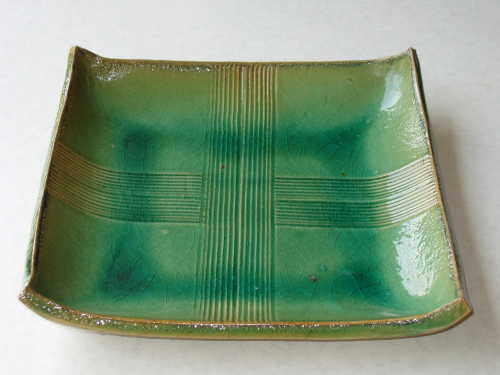
Picture: Dark Green - Iron Glazed Crock by Keitoku Kato
Image Designer: Izumi Mori

Saturday, February 19, 2005

The Glocal Book:"The Book of Tea" by Okakura Kakuzou(Tenshin)-No.66

Tea-Master; Master of Arts in Cleaning & Dusting


「One of the first requisites of a tea-master is the knowledge of how to sweep, clean, and wash, for there is an art in cleaning and dusting.

A piece of antique metal work must not be attacked with the unscrupulous zeal of the Dutch housewife.

Dripping water from a flower vase need not be wiped away, for it may be suggestive of dew and coolness.」
(From the Book of Tea-The Tea-Room, p.64, Charles E. Tuttle Co., Tuttle, Vermont-Tokyo, Japan)

This is the Reason that the Way of Tea is the culture of daily life.

If you are a Man to be the Master minds of Tea-Drinking, you have to behave like the Man of delicate & sensitive about every tinny matters.

You have to be the Man of refined & elegant about every movements & manners.

Click Please!! Listed on BlogShares


Picture: Blue - Green Glazed Square Plate by Keitoku Kato
Image Designer: Izumi Mori
Friday, February 18, 2005

The Glocal Book:"The Book of Tea" by Okakura Kakuzou(Tenshin)-No.65

The Tea-Room; Everything is Absolutely Clean


「Even in the daytime the light in the room is subdued, for the low eaves of the slanting roof admit but few of the sun's rays.

Everything is sober in tint from the celing to the floor ; the guests themselves have carefully chosen garments of unobtructive colours.

The mellowness of age is over all, everything suggestive of recent acquirement being tabooed save only the one note of contrast furnished by the bamboo dipper and the linen napkin, both immaculately white and new.

However faded the tea-room and the tea-equipage may seem, everything is absolutely clean.

Not a particle of dust will be found in the darkest corner, for if any exists the host is not a tea-master」
(From the Book of Tea-The Tea-Room, pp.63-64, Charles E. Tuttle, Rutland, Vermont, Tokyo, Japan)

In the midst of city, imagine you are in the dark corner of absolutely clean Tea-Room without a particle of dust.

Do you will feel free or nervous?


Click Please!! Listed on BlogShares


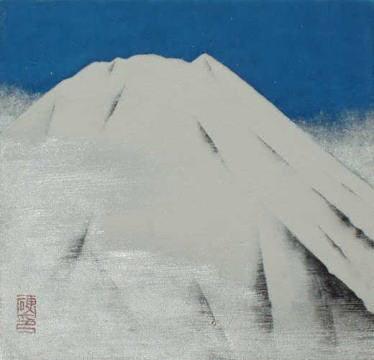
Picture: Mt.Fuji by Katashi Oyama
Image Designer: Izumi Mori

Thursday, February 17, 2005

The Glocal Book:"The Book of Tea" by Okakura Kakuzou(Tenshin)-No.64

The Tea-Room; the Silence; The Kettle Sing


「The order of precedence having been mutually agreed upon while resting in the machiai, the guests one by one wil enter noiselesly and take their seats, first making obeisance to the picture or flower arrangement on the tokonoma.

The host will not enter the room until all the guests have reated themselves and quiet reigns with nothing to break the silence save the note of the boiling water in the iron kettle.

The kettle sings well, for pieces of iron are so arranged in the bottom as to produce a peculiar melody in which one may hear the echoes of a cataract muffled by clouds, of a distant sea breaking among the rocks, a rainstorm sweeping through a bamboo forest, or of the soughing of pines on some fareway hill.」
(From the Book of Tea-The Tea-Room, pp.62-63, Charles E. Tuttle Co., Rutland, Vermont, Tokyo, Japan)

I hope you are able to imagine the silence in theTea-Room, in which you hear and/or listen to the singing songs of boiling water in the iron kettle.

I am sure you will understand various kinds of the singings of the kettles.

It is the supreme spritual and natural songs.

You will realize and accept the world of quiet and relaxes in the midst of a city by the singing song of the kettle.

Click Please!! Listed on BlogShares


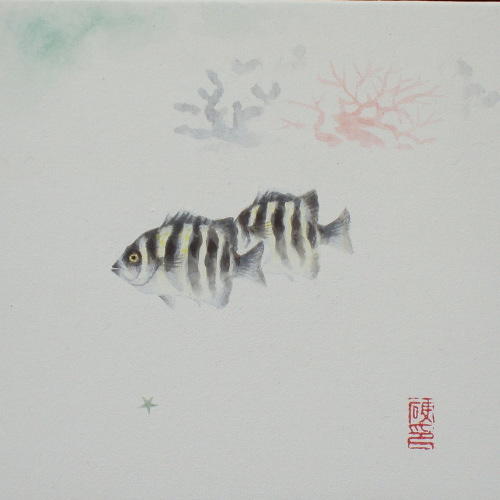
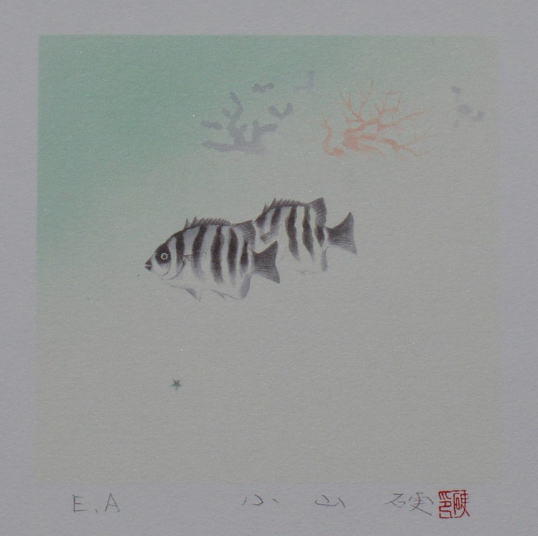
Picture: Striped Porgy by Katashi Oyama
Image Designer: Izumi Mori

Wednesday, February 16, 2005

The Glocal Book:"The Book of Tea" by Okakura Kakuzou(Tenshin)-No.63

The Tea-Room; The House of Peace;
Inculate Humanity


「Thus prepared the guest will silently approach the sanctuary, and, if a samurai, will leave his sword on the rack beneath the eaves, the tea-room being preeminently the house of peace.

Then he will bend low and creep into room through a small door not more than three feet in height.

The proceeding was incumbent on all guests,--high and low alike,--and was intended to inculcate humanity.」
(From the Book of Tea-The Tea-Room, p.62, Charles E. Tuttle Co., Rutland, Vermont, Toky, Japan)

Passing Through the Roji, you will reach to the entrance to the tea-room.

You will find the very small door, from which you have to enter the tea-room.

Inside the tea-room, you will enjoy the peaceful world of humanity.

Click Please!! Listed on BlogShares


Picture: Blue - Green Glazed Square Plate by Keitoku Kato
Image Designer: Izumi Mori

Tuesday, February 15, 2005

The Glocal Book:"The Book of Tea" by Okakura Kakuzou(Tenshin)-No.62

Roji; Kobori-Enshiu; Yearing for the Freedom that Lay in the Expanse Beyond


「Others,like Kobori-Enshiu, sought for a different effect.

Enshiu said the idea of the garden path was to be found in the following verses:

"A cluster of summer trees,
A bit of the sea,
A pale evening moon."

It is not difficult to gather his meaning.

He wished to create the attitude of a newly-awakened soul still lingering amid shadowy dreams of the past, yet bathing in the sweet unconsciouss of a mellow spiritual light, and yearning for the freedom that lay in the expanse beyond.」
(From the Book of Tea-The Tea-Room, pp.61-62, Charles E. Tuttle Co., Rutland, Vermont-Tokyo, Japan)

It is clear that the Roji is the important path to the sophisticated spiritual world of Tea-drinking, the way of Tea.

Click Please!! Listed on BlogShares


Picture: Olibe Glazed Crock by Keitoku Kato
Image Designer: Izumi Mori

Monday, February 14, 2005

The Glocal Book:"The Book of Tea" by Okakura Kakuzou(Tenshin)-No.61

Roji; Rikiu; Utter Loneliness


「Some, like Rikiu, aimed at utter loneliness, and claimed the secret of making a roji was contained in the ancient ditty:

"I looked beyond;
Flower are not,
Nor tinted leaves.

On the sea beach
A solitary cottage stands
In the waring light
Of an autumn eve."


(From the Book of Tea-The Tea-Room, p.61, Charles e. Tuttle Co., Rutland, Vermont,-Tokyo, Japan)

I hope you imagine What the Roji means.

As the great tea master Rikiu suggested, the Roji is the way to Utter loneliness.

Click Please!! Listed on BlogShares


Picture: Hare by Katashi Oyama
Image Designer: Izumi Mori

Saturday, February 12, 2005

The Glocal Book:"The Book of Tea" by Okakura Kakuzou(Tenshin)-NO.60

In the Midst of a City;
Feel as if you were in the Forest


「One may be in the midst of a city, and yet feel as if he were in the forest far away from the dust and din of civilisation.

Great was the ingenuity displayed by the tea-masters in producing these effects of serenity and puruty.

The nature of the sensations to be aroused in passing through the roji differed with different tea-matters.」
(From the Book of Tea-The Tea-Room, pp,60-61, Charles E. Tuttle Co., Rutland, Vermont, Tokyo, Japan)

At Tea-drinking, the Roji is the most important pass way to the world of Tea-ceremony.

You will drink Tea in the midst of a city.

Yet, you will find you are as if in the forest far away from the noisy of the manners and customs.

Click Please!! Listed on BlogShares


Picture: Blue - Green Glazed Square Plates by Keitoku Kato
Image Designer: Izumi Mori

Thursday, February 10, 2005

The Glocal Book:"The Book of Tea" by Okakura Kakuzou(Tenshin)-No.59

The Roji; Break Connection with
the Outside World

「Again the Roji, the garden path which leads from the machiai to the Tea-room, signified the first stage of meditation,--the passage into self-illumination.

The Roji was intended to break connection with the outside world, and to produce a fresh sensation conductive to the full enjoyment of aesthetisism to the tea-room itself.

One who has trodden this garden path can not fail to remember how his spirit, as he walked in the twilignt of evergreens over the regular irregularities of the stepping stones, beneath which lay dried pine needles, and passed beside the moss-covered granite lanterns, became uplifted above ordinary thoughts.」
(From the Book of Tea-The Tea-Room, p.60, Charles E. Tuttle Co., Rutland, Vermont, Tokyo, Japan)

The Roji is very important to the world of tea drinkig.

As mentioned by Okakura, The Roji is the pass-way to the tea world to produce a fresh sensation conductive to the full aesthetism to the tea-room.

You will appreciate the Roji is also the way to the spiritual world, eapecilly to the world of The Zennism and/or The Taoism.

Click Please!! Listed on BlogShares


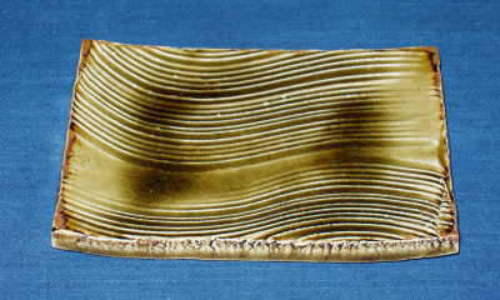
Picture: Ash-Glazed Combed Pattern Rectangular by Keitoku Kato
Image Designer: Izumi Mori

Wednesday, February 09, 2005

The Glocal Book:"The Book of Tea" by Okakura Kakuzou(Tenshin)-No.58

The Foundations of Tea-Ceremony


「We have already said that it was the ritual instituted by the Zen
monks of successively drinking tea out of a bowl before the image of Bodhi Dharma, which laid the foundations of the tea-ceremony.

We might add here that the altar of the Zen chapel was the prototype
of the Tokonoma,--The place of honour in a Japanese room where paintings and flowers are placed for the edification of the guests.」
(From the Book of Tea-the Tea-Room, p.59, Charles E. Tuttle Co., Rutland, Vermont-Tokyo, Japan)

Today, we know the relation between the tea- ceremony and the Zen.

I think you understand the foundations of the way of tea in relation to drink tea.

In addition, we realize the prototype of the Tokonoma.

Click Please!! Listed on BlogShares


Picture: Old Seto Glazed Long Neck look like Crane Crock by Keitoku Kato
Image Designer: Izumi Mori

Tuesday, February 08, 2005

The Glocal Book:"The Book of Tea" by Okakura Kakuzou(Tenshin)-No.57

The Simplicity & Purism of the Tea-Room;
Bare : The Zen Monastery


「The simplicity and purism of the tea-room resulted from emulation of the Zen monastery.

A Zen monastery differs from those of other Buddhist sects inasmuch as it is meant only to be a dwelling place for the monks.

Its chapel is not a place of worship or pilgrimage, but a college room where the students congregate for discussion and the practice of meditation.

The room is bare except for a central alcove in which, behind the altar, is a statue of Bodhi Dharma, the founder of the sect, or of Sakyamuni attended by Kashiapa and Ananda, the two earliest Zen patriarchs.

On the altar, flowers and incence are offered up in memory of the great contributions which these sages made to Zen」
(From the Book of Tea-the Tea-Room, pp.58-59, Charles E. Tuttle Co., Rutland, Vermont-Tokyo, Japan)

The Tea-Room is enough to be bare to drink tea and to discuss about the right way of life.

If you are trying to drink tea alone, the empty Tea-Room is best for the practice of meditation.

You could concentrate on the deep pure meditation.

Click Please!! Listed on BlogShares


Picture: Mt.fuji by Katashi Oyama
Image Designer: Izumi Mori

Monday, February 07, 2005

The Glocal Book:"The Book of Tea" by Okakura Kakuzou(Tenshin)-No.56

The Durability of Japanese Wooden Architecture

「In the Golden Hall of Horiuji and the Pagoda of Yakushiji, we have noteworthy examples of the durability of our wooden architecture.

These buildings have practically stood intact for nealy twelve centuries.
The interior of the old temples and palaces was profisely decorated.

In the Hoodo temple at Uji, dating from the tenth century, we can still see the elaborate canopy and gilded baldachinos, many-coloured and inlaid with mirrors and mother-of-pearl, as well as remains of the paintings and sculpture which formerly covered the walls, at Nikko and in the Nijo castle in Kyoto, we see structural beauty sacrificed to a wealth of ornamentation which in colour and exquisite detail equals the utmost gorgeousness of Arabian or Moorish effort.」
(From the Book of Tea-The Tea-Room, pp.57-58, Charles E. Tuttle Co., Rutland, Vermont, Tokyo, Japan)

You are still able to visit and look at The old temple of Horiuji and the Pagoda of Yakushiji .

The facts mean they are durable for almost 1300 years.

Yet, you'll find much more older building in Egypt and Greek.
These Japanese old Temples are completely different from the history of Tea-Room.

Click Please!! Listed on BlogShares

Saturday, February 05, 2005

The Glocal Book:"The Book of Tea" by Okakura Kakuzou(Tenshin)-No.55

The smallest Tea-House; Differ from
the Classical Architecture of Japan Itself


「The tea-room is not only different from any production of Western architecture, but also contrasts strongly with the classical architecture of Japan itself.

Our ancient noble edifices, whether secular or ecclesiastical, were not to be despised even as regards their mere size.

The few that have been spared in the disastrous conflagrations of centuries are still capable of aweing us by the grandeur and richness of their decoration.

Huge pillars of wood from two to three feet in diameter and from thirty to forty feet high, supported, by a complicated network of brackets, the enormous beams which groaned under the weight of the tile-covered slanting roofs.

The material and mode of construction, through weak against fire, proved itself strong against earthquakes, and well suited to the climatic conditions of the country.」
(From the Book of Tea-The Tea-Room, p.57, Charles E. Tuttle Co., Rutland, Vermont, Tokyo, Japan)

Okakura mentioned that the architecture of the Tea-Room is differ from those of the Western and Japanese.

Yet, I think it not necessarily right.

You should not consider from the historical monuments you could find present days.

The origin of the Tea-Room is from the common and general poor farmer's houses, which have destroyed without any historical monument.

Click Please!! Listed on BlogShares


Picture: Mt.Fuji by Katashi Oyama
Image Designer: Izumi Mori

The Glocal Book:"The Book of Tea" by Okakura Kakuzou(Tenshin)-No.54

The Tea-Room; The Smallest of Japanese House


「The tea-room is unimpressive in appearance.

It is smaller than the smallest of Japanese houses, while the materials used in its construction are intended to give the suggestion of refined poverty.

Yet we must remember that all this is the result of profound artistic forehought, and that the details have been worked out with care perhaps even greater than that expended on the building of the richest palaces and temples.

A good tea-room is more costly than an ordinary mansion, for the selection of its materials, as well as workmanship, requires immense care and precision.

Indeed the carpenters employed by the tea-masters form a distinct and highly honoured class among artisans, ther work being no less delicate than that of the makers of lacquer cabinets.」
(From the Book of Tea-The Tea-Room, pp.56-57, Charles E. Tuttle Co., Rutland, Vermont-Tokyo, Japan)

I think the characteristics of The Tea-Room are as follows.

In The smallest Tea-Room, just two persons could sit down at once. The one is guest and the other is host. One of the first and historically famous Tea-Room of the samllest one was said to be built by Senno-Soyeki(Rikiu).

The small houses were generally for poor farmer, which is sufficient to drink tea.

The spiritual mind for drinking tea is just sit down to drink tea.

You should understand the essential mind as follows.

It's just enough to put a pot over the fire and pour hot water to a teacup.

In that sence, I don't prefer to spend much money to build The Expensive The Tea-House.

Yet, don't forget the essence of The Smallest Tea-House should be unsymmetric and imperfect.

Click Please!! Listed on BlogShares

Thursday, February 03, 2005

The Glocal Book:"The Book of Tea" by Okakura Kakuzou(Tenshin)-No.53

The Sukia

「The early tea-room consisted merely of a portion of the ordinary drawing-room partitioned off by screens for the purpose of the tea-gathering.

The portion partitioned off was called the Kakoi(enclosure), a name still appllied to those tea-rooms which are built into a house and are not indipendent constructions.

The Sukia consists of the tea-room proper, desiggned to accommodate not more than five persons, number suggestive of the saying "more than the Graces and less than the Muses," an anteroom(midsuya) where the tea utensils are washed and arranged before being brought in, a portico(machiai) in which the guests wait until they receive the summons to enter the tea-room, and a garden path(the roji) which connects the machiai with the tea-room.」
(From the Book of Tea-The Tea-Room, pp. 55-56, Charles E. Tuttle Co., Rutland, Vermont-Tokyo, Japan)

At present days, most of japanese may not understand The Sukia.

Because, modern japanese houses do not arrange such sorts of pace and/or room.

And it's quite rare to use such sorts of facilites at daily life of avarage japanese people.

Yet, I think they should understand the conveniences and rationality of the facilities.

The origin of The Sukia is based on the country and/or farmer's house.

I believe The Sukia has the glocal characteristics of Japanese house.


Click Please!! Listed on BlogShares

The Glocal Book:"The Book of Tea" by Okakura Kakuzou(Tenshin)-No.52

The First Tea-Room


「The first independent tea-room was the creation of Senno-Soyeki, commonly known by his later name of Rikiu, the greatest of all tea-masters, who, in the sixteenth century, under the patronage of Taiko-Hideyoshi, instituted and brought to a high state of perfection the formalities of the Tea-ceremony.

The proportions of the tea-room had been previously determined by Jowo-a famous tea-master of the fifteen century 」
(From the Book of Tea-The Tea-Room, p.55, Charles E. Yuttle Co., Rutland, Vermont-Tokyo, Japan)

The tea-room has the symbol of Tea-ceremony.

The first style of tea-room was supposed to be determined by Takeno-Jowo, who teached Senno-Soyeki.

However, at the generation of Ashikaga of early fifteen centyries, Shogun Ashikaga-Yoshinori was the first to set the tea-room at his palace.

Late fifteenth, Shogun Ashikaga- Yoshimasa was the most contributer and creater to develop the tea-culture. Famous temple Ginkakuji at Kyoto district was the center of the culture, we call Higashiyama bunka(culture) .
The name of house, Higashiyama-Sansou might be the kind of salon and enjoyed the tea as the first isolated tea-room, which was larger than those of Senno-Soyeki.

Takeno-Jowo learned tea related culture from Shogun Ashikaga Yoshimasa group.

Click Please!! Listed on BlogShares


Picture: Dark Green - Iron Glazed Crock by Keitoku Kato
Image Designer: Izumi Mori

Tuesday, February 01, 2005

The Glocal Book:"The Book of Tea" by Okakura Kakuzou(Tenshin)-No.51

The Tea-Room;
The Abode of the Unsymmetrical; The Imperfect


「The tea-room(the Sukiya) does not pretend to be other than a mere cottage-a straw hut, as we call it.
The original ideographs for Sukiya mean the Above of Fancy.
Latterly the various tea-masters substituted various Chinese charactets according to their conception of the tea-room, and the term Sukiya may signify the Above of Vacancy of the Abode of the Unsymmetrical.
It is an Abode of Fancy insamuch as it is an ephemeral structure built to house a poetic impulse.
It is an Abode of Vacancy inasmuch as it is devoid of ornamentation except for what may be placedin it to satisfy some aesthetic need of the moment.
It is an Abode of the Unsymmetrical inasmuch as it is consecrated to the workship of the Imperfect, purposely leaving some thing unfinished for the play of the imagination to complete.
The ideals of Teaism have since the sixteenth century influenced our architecture to such a degree that the ordinary Japanese inferior of the present day, on account of the extreme simplicity and chasteness of it scheme of decoration, appears to foreigner almost barren.」
(From the Book of Tea-The Tea-Room, pp.54-55, Charles E. Tuttle Co., Rutland, Vermont-Tokyo, Japan)

From the above descrived sentences, you, who have never looked and lived in Japanese-style house, might be difficult to image and to find the artistic feeling.

I think the essential artistic values are in the Abode of Unsymmetical Simplicity and the Imperfect sence to the imaginatory stimulation of completion.

Click Please!! Listed on BlogShares


Picture: Olibe Glazed Crock by keitoku Kato
Image Designer: Izumi Mori

The Glocal Book:"The Book of Tea" by Okakura Kakuzou(Tenshin)-No.50

The Subtle Beauty of the Tea-Room


「To European architects brought up on the traditions of stone and brick construction, our Japanese method of building with wood and bamboo seems scarcely worthy to be ranked as architecture.

It is but quite recently that a competent student of Western architecture has recognised and paid tribute to the remarkable perfection of our great temples.

Such being the case as regards our classic architecture, we could hardly expect the outer to appreciate the subtle beauty of the tea-room, its principles of construction and decoration being entirely different from those of the West. 」
(From the Book of Tea-The Tea-Room, pp.53-54, Charles E. Tuttle Co., Rutland, Vermont-Tokyo, Japan)

Today, we will move to the Chapter ; The Tea-Room.
The architecture for Tea-Room is our traditional house builing.

I think the beaty of the Japanese house is based on the simplicity and unsymmetricity.
The Japanese house is basically made of wood and you will be able to enjoy the different kinds of touch, charm and beauty of the house with aging.

Click Please!! Listed on BlogShares


Picture: Striped Porgy by Katashi Oyama
Image Designer: Izumi Mori