Thursday, June 30, 2005

The Glocal Book:"The Book of Tea" by Okakura Kakuzou(Tenshin)-No.100

Great Precautions Were Taken For
the Preservation of Delicatate Blossoms

『Great precautions were taken for the preservation of delicate blossoms.

Emperor Huensung of the Tang dynasty, hung tiny golden bells on the branches in his garden to keep off the birds.

He it was who went off in the springtime with his court musicians to gladden the flowers with soft music.

A quaint tablet, which tradition ascribes to Yoshitsune, the hero of our Arthurian legends, is still extant in one of the Japanese monasteries.

It is a notice put up for the protection of a certain wonderful plum-tree, and appeals to us with the grim humour of a warlike age.

After referring to the beauty of the blossoms, the inscription says: "Whoever cuts a single branch of this tree shall forfeit a finger therefor."

Would that such laws could be enforced nowadays against those who wantonly destroy flowers and mutilate objects of art!』
(From the Book of Tea,Flowers, pp.96-97, Charles E. Tuttle Co., Rutland, Vermont, Tokyo, Japan)

Now a days, the concepts and feelings for the flowers are completely different.

It is certain that we tend to forget to enjoy about the beauty of nature and need to respect the dignity of nature.

Click Please!! Listed on BlogShares


Picture: With Every Good by Katashi Oyama
Image Designer: Izumi Mori

Sunday, June 26, 2005

The Glocal Book:"The Book of Tea" by Okakura Kakuzou(Tenshin)-No.99

In the East the Art of Floriculture is
a Very Ancient One,
And the Loves of a Poet And His Favourite Plant Have Often Been Recorded in Story
And Song

 『Much may be said in favour of him who cultivates plants.

The man of the pot is far more humane than he of the scissors.

We watch with delight his concern about water and sunshine, his freuds with parasites, his horror of frosts, his anxietry when the buds come slowly, his raputure when the leaves attain their lustre.

In the East the art of floriculture is a very ancient one, and the loves of a poet and his favporite plant have often been recorded in story and song.

With the development of ceramics during the Tang and Sung dynasties we hear of wonderful receptacles made to hold plants, not pots, but jewelled palaces.

A special attendant was detailed to wait upon each flower and to wash its leaves with soft brushes made of rabbit hair.

It has been written that the peony shuld be bathed by a handsome maiden in full costume, that a winter-plum should be watered by a pale, slender monk.

In Japan, one of the most popular of the No-dances, the Hachinoki, composed during the Ashikaga peiod, is based upon the story of an impoverished knight, who, on a freezing night, in lack of fuel for a fire, cuts his cherished plants in order to entertain a wandering friar.

The friar is in reality no other than Hojo-Tokiyori, the Haroun-Al-Raschid of our tales, and the sacrifice is not without its reward.

This opera never fails to draw tears from a Tokio audience even toay.』

(From the Book of Tea, Flowers, pp.95-96, Charles E. Tuttle Co., Rutland, Vermont, Tokyo, Japan)

Click Please!! Listed on BlogShares

Thursday, June 16, 2005

The Glocal Book:"The Book of Tea" by Okakura Kakuzou(Tenshin)-No.98

Have You Not Noticed That the Wild Flowers
Are Becoming Scarcer Every Year ?

『Why were the flowers born so beautiful and yet so hapless ?

Insects can sting, and even the meekerst of beasts will fight when brought to bay.

The bird whose plumage is sought to deck some bonnet can fly from its pursuer, the furred animal whose coast you covet for your own may hide at your approach.

Alas !

The only known flower known to have wings is the butterfly; all others stand helpless before the destroyer.

If they shriek in their death agony their cry never reaches our hardened ears.

We are ever brutal to those who love and serve us in silence, but the time may come when, for our cruelty, we shall be deserted by these best friends of ours.

Have you not noticed that the wild flowers are becoming scarcer every year ?

It may be that their wise men have told them to depart till man becomes more human.

Perhaps they have migrated to heaven. 』
(From the Book of Tea-Flowers, pp.94-95, Charles E. Tuttle Co., Rutland, Vermont, Tokyo)Japan)

It is quite surprising that the wild flowers are becoming scarcer every year at the Okakura's generation already !

Click Please!! Listed on BlogShares


Picture: jikou by Katashi Oyama
Image Designer: Izumi Mori

Monday, June 13, 2005

The Glocal Book:"The Book of Tea" by Okakura Kakuzou(Tenshin)-No.97

Nothing is More Pitiful Than to See a Faded Flowers Remorselessly Flung Upon a Dung Heap

『The wanton waste of flowers among Western communities is more appalling than the way they are treated by Eastern Flower-Masters.
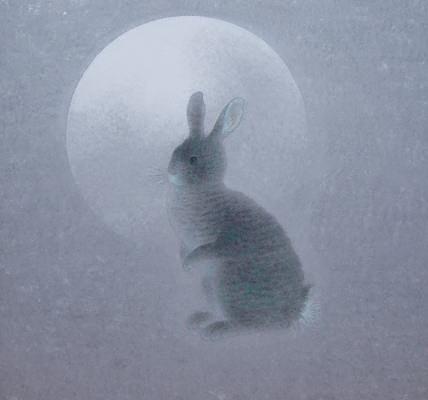

The number of flowers cut daily to adorn the ballrooms and banquet-tables of Europe and America, to thrown away on the morrow, must be something enormous; if strung together they might garland a continent.

Beside this utter carelessness of life, the guilt of the Flower-Master becomes insignificant.

He, at least, respects the economy of nature, selects his victims with careful foresight, and after death does honour to their remains.

In the West the diplay of flowers seems to be part of a moment.

Whither do they all go, these flowers, when the revelery is over?

Nothing is more pitiful than to see a faded flower remorselessly flung upon a dung heap』
(Thr Book of Tea-Flowers, pp.93-94, Charles E. Tuttle Co., Rutland,Vermont, Tokyo,Japan)


All flowers have their life.

It doesn't mean the amount of waste and not the matter of the display moment.

The life of flower blossoms are not long enough and they need to open for their descendants.

I think it's no difference between the West and Easter.

Click Please!! Listed on BlogShares


Picture: Katashi Oyama Work
Image Designer: Izumi Mori

Sunday, June 12, 2005

The Glocal Book:"The Book of Tea" by Okakura Kakuzou(Tenshin)-No.96

Would You Not Have Preferred to Have Been Killed at Once When You Were First Captured?

「 Flowers, if you were in the land of the Mikado, you might some time meet a dread personage armed with scissors and a tiny saw.

He would call himself a Master of Flowers.

He would claim the rights of a doctor and you would instictively hate him, for you know a doctor always seeks to prolong the troubles of his victims.

He would cut, bend, and twist you into those impossible positions which he thinks it proper that you should assume.

He would contort your muscles and dislocate your bones like any osteopath.

He wold burn you with red-hot coals to stop your bleeding, and thrust wires into you to assist your circulation.

He would diret you with salt, vinegar, alum, and somethimes, vitriol.

Boiling water would be poured on your feet when you seemed ready to faint.

It would be his boast that he could keep life within you for two or more weeks longer than would have been possible without his treatment.

Would not have prefferred to have been killed at once when you were fist captured ?

What were the crimes you must have committed during your past incarnation to warrant such punishment as this ? 」
(From the Book of Tea , Flowers, pp.92-93, Charles E. Tuttle Co., Rutland, Vermont, Tokyo, Japan)

You must pay attention to the flowers as if they are your loves.

Click Please!! Listed on BlogShares


Picture: Jugoya by Katashi Oyama
Image Designer: Izumi Mori

Saturday, June 04, 2005

The Glocal Book:"The Book of Tea" by Okakura Kakuzou(Tenshin)-No.95

Are You Aware of the Fearful Doom
That Awaits You?

「Tell me, gentle flowers, teardrops of the stars, standing in the garden, nodding your heads to the bees as they sing of the dews and the sunbeans, are you aware of the fearfull doom that awaits you?
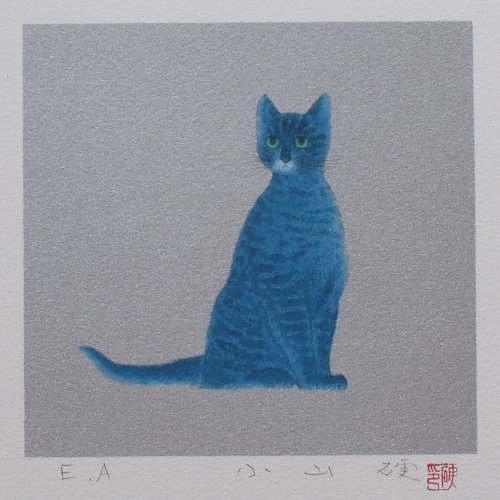
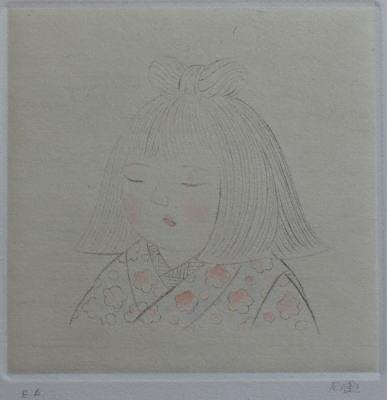
Dream on, sway and frolic while you may in the gentle breezes of summer.

To-morrow a ruthless hand will close around your throats.

You will be wrenched, torn asunder limb by limb, and borne away from your quiet homes.

The wretch, she may be passing fair.

She may say how lovely you are while her fingers are still moist with ypur blood.

Tell me, will this be kindness?

It may be your fate to be imprisoned in the hair of one whom you know to be heartless or to be thrust into the buttonhole of one who would not dare to look you in the face were you a man.

It may even be your lot to be confined in some narrow vessel with only stagnant water to quench the maddening thirst that warns of ebbing life」

(From the Book of Tea, Flowers,p.92, Charles E. Tuttle Co., Rutland, Vermont-Tokyo, Japan)

We must be very sensitive for the tender loving natural flowers.

Click Please!! Listed on BlogShares


Picture: Katashi Oyama Works
Image Designer: Izumi Mori

Sunday, May 22, 2005

The Glocal Book:"The Book of Tea" by Okakura Kakuzou(Tenshin)-No.94

What Atrocities Do We Not Perpetrate
in the Name of Culture and Refinement!

「Sad as it is, we cannot conceal the fact that in spite of our companionship with flowers we have not risen very far above the brute.

Scratch the sheepskin and the wolf within us will soon show his teeth.

It has been said that man at ten is an animal, at twenty a lunatic, at thity a failure, at fort a fraud, and at fifty a criminal.

Perhaps he becames a criminal because he has never creased to be an animal.

Nothing is real to us but hundger, nothing sacred except our own desires.

Shrine after shrine has crumbled before our eyes; but one altar foreever is preserved, that whereon we burn incense to the supreme idol, ーourselves.

Our god is great, and money is his Prophet!

We devastate nature in order to make sacrifice to him.

We boast that we have conquered Matter and forget that it is Matter that has enslaved us.

What atrocities do we not perpetrate in the name of culture and refinement!」
(From the Book of Tea - Flowers, p.91, Charles E.TUttぇCo., Rutland, Vermont, Tokyo, Japan)


What a poor human being at present!

However, yet, we should never give for the wonder of culture and refinement!

Click Please!! Listed on BlogShares


Picture: Acrobat Monkey and His Master by Katashi Oyama
Image Designer: Izumi Mori

Monday, May 16, 2005

The Glocal Book:"The Book of Tea" by Okakura Kakuzou(Tenshin)-No.93

In Joy or Sadness,
Flowers are Our Constant Friends


「In joy or sadness, flowers are our constant friends.

We eat, drink, sing, dance, and flirt with them.

We wed and christen with flowers.

We dare not die without them.

We have worshipped with the lily, we have meditated with the lotus, we have charged in battle array with the rose and the chrysanthemum.

We have even attempted to speak in the langurage of flowers.

How could we live without them?

It frightens one to conceive of a world bereft of their presence.

What solace do they not bring to the bedside of the sick, what a light of bliss to the darkness of weary spirits?

Their serene tenderness restores to us our warning confidence in the universe even as the intent gaze of a beautiful child recalls our lost hopes.

When we are laid low in the dust it is they it is they who linger in sorrow over our graves. 」

(From the Book of Tea; Flowers, p.90-91, Charles E. Tuttle Co., Rutland, Vermont, Tokyo, Japan)

Flowers are everywhere in our daily life, not only for personal affairs but also for the socials.

Click Please!! Listed on BlogShares


Picture: Russianblue by Katashi Oyama
Image Designer: Izumi Mori

Friday, May 13, 2005

The Glocal Book:"The Book of Tea" by Okakura Kakuzou(Tenshin)-No.92

The Realm of Art;
The Subtle Use of The Useless


「In the trembling grey of a spring dawn, when the birds were whispering in mysterious cardence among the trees, have you not felt that they were talking to their mates about the flowers?

Surely with the mankind the appreciation of flowers must have been coeval with the poetry of love.

Where better than in a flower, sweet in its unconsciousness, fragrant because of its silence, can we image the unfolding of a virgin soul?

The primeval man in offering the first garland to his maiden therby transcended the brute.

He became human in thus rising above the crude necessities of nature.

He entered the realm of art when he perceived the subtle use of the useless.」
(From the Book of Tea-Flowers, pp.89-90, Charles E. Tuttle Co., Rutland, Vermont, Tokyo, Japan)

Now, let's learn about the role of flowers in the Way of Tea.

Okakura Tenshin talks the interesting story about Japanese Flower arrangements.

Click Please!! Listed on BlogShares


Picture: Amakusa by Katashi Oyama
Image Designer: Izumi Mori

Sunday, May 08, 2005

The Glocal Book:"The Book of Tea" by Okakura Kakuzou(Tenshin)-No.91

We Are Destroying Art
in Destroying the Beautiful in Life


「The claims of contemporary art cannot be ignored in any vital scheme of life.

The art of today is that which really belongs to us: it is our own reflection.

In condemning it we but our condemn ourselves.

We say that the present age possesses no art:ーwho is responsible for this?

It is indeed a shame that despite all our rhapsodies about the ancients we pay so

little attention to our own possibilities.

Struggling artists, weary souls lingering in the shadow of cold disdain!

In our self-centred century, what inspiration do we offer them?

The past may well look with pity at the poverty of our civilisation; the future

will laugh at the barrenness of our art.

We are destroying art in destroying the beautiful in life.

Would that some great wizard might from the stem of society shape a mighty harp

whose strings would respond to the touch of genius.」(From the Book of Tea, Art Appreciation, Charles E. Tuttle Co., Rutland, Vermont, TOkyo, Japan, p.87)

The part of Art Appreciation is very difficult to me.

In addition, the Art Appreciation in relation to the Cup of Humanity is much more difficult.

Click Please!! Listed on BlogShares


Picture: Mt.Fuji by Katashi Oyama
Image Designer: Izumi Mori

Saturday, May 07, 2005

The Glocal Book:"The Book of Tea" by Okakura Kakuzou(Tenshin)-No.90

A Single Masterpiece Can Teach Us
More Than Any Number of Mediocre Products

「The nineteenth century, pregnant with the theory of evolution, has moreover created in us the habit of losing sight of the individual in the species.

A collector is anxious to acquire specimens to illustrate a period or a school and forgets that a single masterpiece can teach us more than any number of the mediocre products of a given period or school.

We classify too much and enjoy too little.

The sacrifice of the aesthetic to the so-called scientific method of exhibition has been the bane of many museums. 」(From the Book of Tea, pp.86-87, Charles E. tuttle Co., Rutland, Vermont, Tokyo, Japan)

I think the facts are very important to understand the aesthetic masterpiece .

Click Please!! Listed on BlogShares


Picture: Kayokukan by Katashi Oyama
Image Designer: Izumi Mori

Thursday, April 21, 2005

The Glocal Book:"The Book of Tea" by Okakura Kakuzou(Tenshin)-No.89

Mistake of Confusing Art with Archaeology


「Another common mistake is that of confusing art with archaeology.

The veneration born of antiquity is one of the best traits in the human character, and fain would we have it cultivated to a greater extent.

The old masters are rightly to be honoured for opening the path to future enlightment.

The mere fact that have passed unscathed through centuries of criticism and come down to us still covered with glory commands our respect.

But we should be foolish indeed if we valued their achievement simply on the score of age.

Yet we allow our historical sympathy to override our aesthetic discrimination.

We offers flowers of approbation when the artist is laid in his grave.」

(From the Book of Tea, pp.85-86,Charles E. Tuttle Co., Rutland, Vermont-Tokyo, Japan)

The facts of confusing art with archaeolog might be more common at the present day.

We must sincerely listen to what he mentioned.

Click Please!! Listed on BlogShares


Picture: Kayokukan by Katashi Oyama
Image Designer: Izumi Mori

Monday, April 18, 2005

The Glocal Book:"The Book of Tea" by Okakura Kakuzou(Tenshin)-No.88

The Majorities Want The Costly,
Not The Refined; The Fashionable,
Not The Beautiful


「It is much to be regretted that so much of the apparent enthusiasm for art at the present day has no foundation in real feeling.

In this democratic age of ours men clamour for what is popularly considered the best, regardless of their feelings.

They want the costly, not the refined; the fashionable, not the beautiful.

To the masses, contemplation of illstrated periodicals, the worthy product of their own industrialism, would give more digestible food for artistic enjoyment than the early Italians or the Ashikaga masters, whom they prettend to admire.

The name of the arist is more important to them than the quality of the work.

As a Chinese critic complained many centuries ago, "People criticise a picture by their ear."

It is this lack of genuine appreciation that is responsible for the pseudo-classic horrors that to-day greet us whereever we turn.」
(From The Book of Tea, p.85, Charles E. Tuttle Co, Rutland, Vermont-Tokyo, Japan)

It is surprising that from his generation, the evaluation of art is already the usages of popularity.

Click Please!! Listed on BlogShares


Picture: With Every Good by Katashi Oyama
Image Designer: Izumi Mori

Monday, March 21, 2005

The Glocal Book:"The Book of Tea" by Okakura Kakuzou(Tenshin)-No.87

Rikiu; Love Only Objects
Which Really He Appreciatted


「One is reminded in this connection of a story concerning Kobori-Enshiu.

Enshiu was complimented by his disciples on the admirable taste he had displayed in the choice of his collection.

Said they, "Each piece is such that no one could help admiring.

It shows that you had better taste than had Rikiu, for his collection could only be appreciated by one beholder in a thousand."

Sorrowfully Enshiu replied: " This only proves how commonplace I am.

The great Rikiu dared to love only those objects which personally appealed to him, whereas I uncosciously cater to the taste of the majority.

Verily, Rikiu was one in a thousand among tea-masters."」
(From the Book of Tea-Art Appreciation, Charles E. Tuttle Co., Rutland, Vermont, Tokyo, Japan)

This part is very important about the greatness of art appreciation.

The facts mean the great art is not necessarily appreciatted by the taste of majority.

Click Please!! Listed on BlogShares


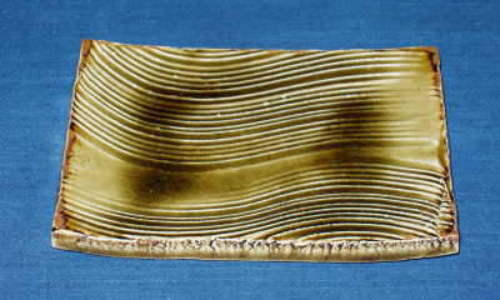
Picture: Ash-Glazed Combed Pattern Rectangular Dish
Image Designer: Izumi Mori

Sunday, March 20, 2005

The Glocal Book:"The Book of Tea" by Okakura Kakuzou(Tenshin)-No.86

Art; Individual Appreciation


「We must remember, however, that art is of value only to the extent that it speaks to us.

It might be a universal language if we ourselves were universal in our sympathies.

Our finite nature, the power of tradition and conventionality, as well as our hereditary instincts, restrict the scope of our capacity for artistic enjoyment.

Our very individuality establishes in one sense a limit to our understanding; and our aesthetic personality seeks its own affinities in the creations of past.

It is true that with cultivation our sense of art appreciation broadens, and we become able to enjoy many hitherto unrecognised expressions of beauty.

But after all, we see only our own image in the universe,-our particular idiosyncrasies dictate the mode of our preceptions.

The tea-masters collected only objects which fell strictly within the measure of their individual appreciation.」
( From the Book of Tea-Art Appreciation,pp.83-84, Charles E, Tuttle Co., Rutland, Vermont, Tokyo, Japan)

After all, the art appreciation is depend on individual sensitivity.

It is not the matter of knowledge, but your creative resonance to the art.

Click Please!! Listed on BlogShares


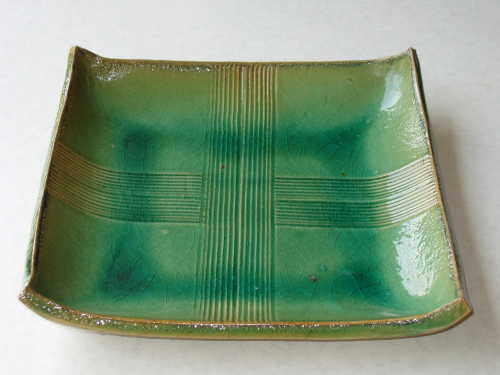
Picture: Blue - Green Glazed Square Platter by Keitoku Kato
Image Designer: Izumi Mori

The Glocal Book:"The Book of Tea" by Okakura Kakuzou(Tenshin)-No.85

The Great Value of The Masterpieces


「At the time when Teaism was in the ascendency the Taiko's generals would be better satisfied with the present of a rare work of art than a large grantb of territory as a reward of victory.

Many of our favourite dramas are based on the loss and recovery of a noted masterpiece.

For instance, in one play the palace of Lord Hosokawa, in which was preserved the celebrated painting of Dharuma by Sesson, suddenly takes fire through the negligence of the samurai in charge.

Resolved at all hazards to rescue the precious painting, he rushes into the burning building and seizes the kakemono, only to find all means of exit cut off by the flames.

Thinking only of the picture, he slashes open his body with his sword, wraps his torn sleeve about the Sesson, and plunges it into the gaping wound.

The fire is at last extinguished.

Among the smoking embers is found a half-consumed corpse, within which reposes the treasure uninjured by the fire.

Horrible as such tales are, they illustrate the great value that we set upon a masterpiece, as well as the devotion of a trusted samurai.」
(From the Book of Tea-Art Appreciation, pp.82-83, Charles E, Tuttle Co., Rutland, Vermont, Tokyo, Japan)

From this story, you can imagine how they think much of a Masterpipiece.

The fact was explained in relation to the devotion of the Samurai mind.

Click Please!! Listed on BlogShares


Picture: With Every Good, Kayokukan by Oyama Katashi
Image Designer: Izumi Mori

Friday, March 18, 2005

The Glocal Book:"The Book of Tea" by Okakura Kakuzou(Tenshin)-No.84

ART; Ennoble Mankind

「Nothing is more hallowing than the union of kindered spirits in art.

At the moment of meeting, the art lover transcends himself.

At once he is and is not.

He cathes a glimpse of Infinity, but words cannot voice his delight, for the eye has no tongue.

Freed from the fetters of matter, his spirit moves in the rhythm of things.

It is thus that art becomes askin to religion and ennobles mankind.

It is this which makes a masterpiece something sacred.

In this old days the veneration in which the Japanese held the work of the great artist was intense.

The tea-masters guarded their treasures with religious secrecy, and it was often necessary to open a whole series of boxes, one within another, before reaching the shrine itself-the silken wrapping within whose soft folds lay the holy of holies.

Rarely was the object exposed to view, and then only to the initiated.」
( From the Book of Tea-Art Appreciation, pp.81-82, Charles E. Tuttle Co., Rutland, Vermont, Tokyo, Japan)

I will not necessarily agree to guard their arts with religious secrecy.

It should be open to everybody to ennoble mankind.

Click Please!! Listed on BlogShares


Picture: Blue - Green Glazed Square Plate by Keitoku Kato
Image Designer: Izumi Mori